Monday, July 27, 2015

Day 8. South to North.

Blog is better read in chronological order. Previous posts:
  1. The route
  2. Day 1. Die Hängebrücke
  3. Day 2. Conquering two peaks
  4. Day 3. Glacier lakes and a small miracle
  5. Day 4. From the top of the mountain to the depth of the earth
  6. Day 5. Berchtesgaden. Rossfeld route. Malenwinkler rund.
  7. Day 6. Klagenfurt
  8. Day 7. Design city. Schwarzenegger's heritage.

Next morning we set out to move from south of Austria back to its north, to Melk Abbey, which
caught our attention in 2013.  Last time it was being renovated, and we also arrived late in the evening, so didn’t get into the building and internal gardens. This time we planned 2 days to explore the abbey and take a day trip down the Danube river and back.

The route to Melk passed through the mountains. It was raining the whole way, so driving was not as easy as it could have been. In spite of that I enjoyed the surroundings: mountains half-covered in blankets of clouds, small villages on the mountain flanks, and the road winding up and down through valleys and forest. Sometimes next to the road a deep abyss would open, covered in trees and bushes, leaving you guessing how much further deep it goes.

The weather was gracious to us. When we arrived in Melk, it was hot and sunny again, and abbey looked gorgeous. By now it was fully renovated and also still open, so without further delays we went inside.


Inside I was amazed how rich, modern and beautiful the exhibition was. The tour guide talked with passion about the history of the abbey, the relics stored in it and interesting installations in some halls. One hall was illuminated green, another - blue, one hall had 11 sculptures symbolizing human's path from being born to maturity, leaving the 12th - state of enlightenment - out.


The abbey was rebuilt several times, last time in 18th century, last renovation started in 1978. Now it is finished. The balcony on the west side of the abbey (see on the right in the picture below) didn't exist until 18th century, now beautiful views to the city and the river open from it.


Behind the abbey there are gardens and a small shady forest with trails and thoughtful texts here and there. Stone pyramids found me again in this forest, and I erected one more:  


The Danube river has a small arm next to Melk, which created an island, where the berths are built for river boats coming all the way to Vienna. The island itself is covered in forest and has walking trails all over.  A bridge is leading to it, notable because it provides a perfect spot for panoramic abbey pictures.


In the evening, when Heavens decided we had finished our day, the black clouds came and it started raining.

But it didn't rain for long, the clouds passed and a beautiful rainbow decorated the sky above us.


 In the hotel I came to conclusion that stone pyramids are following me, there was one more waiting on the wall...


Sunday, July 26, 2015

Day 7. Design city. Schwarzenegger's heritage.

Blog is better read in chronological order. Previous posts:
  1. The route
  2. Day 1. Die Hängebrücke
  3. Day 2. Conquering two peaks
  4. Day 3. Glacier lakes and a small miracle
  5. Day 4. From the top of the mountain to the depth of the earth
  6. Day 5. Berchtesgaden. Rossfeld route. Malenwinkler rund.
  7. Day 6. Klagenfurt

I couldn't remember why I picked Graz as a stop. One reason might have been that we wanted to visit Styria in general, since we haven't yet been there, but why pick Graz and stay for two nights - that will forever stay a mystery to me.

Graz is a small town, both literally (the name means "small town" in Slavic languages) and by population (about 300,000 in 2014), which does not prevent it from being a second-largest town in Austria and being for centuries more important for Slovenes than their capital Ljubljana.

The town left a mixed feeling of surprise and desolation. It was Sunday, everything was closed, there were few people on the streets, and the town itself didn't look very touristic or lively. Graz is famous for being the City of Design and indeed there were quite a few interesting buildings. Next to a church (below) sat a very peculiar cat:


 Another famous design element is the artificial island on the river Mur in the center, called simply Murinsel ("Murisland").


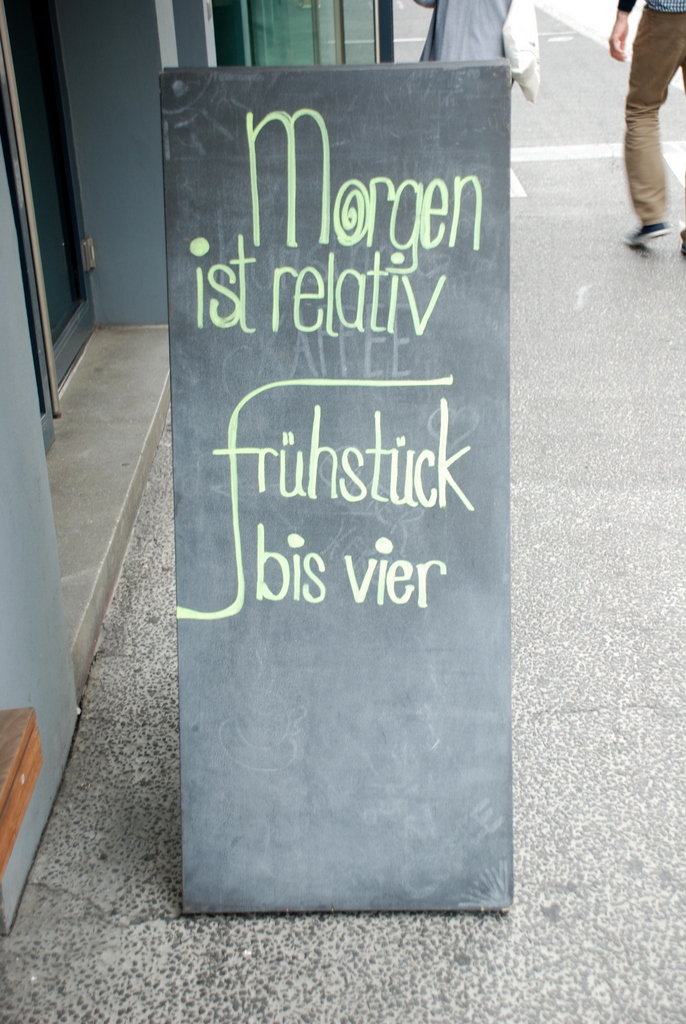
It didn't raise to expectations though - looking slightly unkempt and too simple to be a landmark. A couple of other funny things found today: a table supported by slippers, cafe welcoming "owls" ...


... a graffiti on a hot topic ...


... and a town core (claimed to be located in the geometric center of Graz):


The Old Town of Graz is one of the best preserved in Central Europe, although the town was bombed in WWII. It is known for its Schlossberg hill formerly hosting a castle (Schloss), Clock Tower with a small quirk and a double-spiral staircase in one of the buildings. 


There are tunnels inside the hill under Schlossberg, built as bomb shelters during WWII. They are easily accessible and also feature a lift taking you up to Schlossberg without much hassle.


From the top of the hill there are nice views to Graz with its "well yards" resembling those of Saint-Petersburg.


At one point it felt like we were back in Tallinn, with Viru hotel sticking out of sea of Old Town rooftops.


But the main pleasant surprise was not in Graz itself, but in a small village 10 km from it, called Thal, a birthplace of Arnold Schwarzenegger. There is a museum in his house, but the leaflet in the Tourist information office bluntly lied about its' opening times, so we were late and could only enjoy the entrance to the house... 


... and imagine how little Arnold ran around the wheat and corn fields.


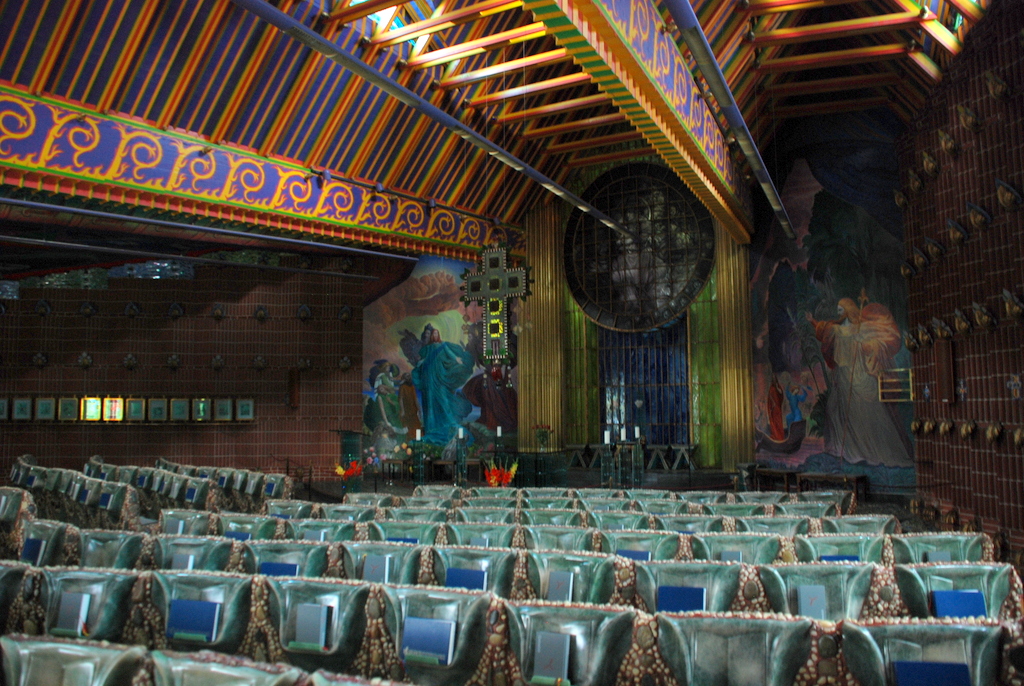
The small walk led us to a local church, which turned out to be the landmark of the day. Built in 1618, rebuilt and completely redesigned in 1992-94 according to design of the painter Ernst Fuchs. I have never seen churches like this. Judge for yourself:


With this the day was over. Tomorrow a trip lies ahead over the mountains to Melk Abbey. 

Day 6. Klagenfurt

Blog is better read in chronological order. Previous posts:
  1. The route
  2. Day 1. Die Hängebrücke
  3. Day 2. Conquering two peaks
  4. Day 3. Glacier lakes and a small miracle.
  5. Day 4. From the top of the mountain to the depth of the earth
  6. Day 5. Berchtesgaden. Rossfeld route. Malenwinkler rund.

The hostess of the guesthouse we stayed in the last night at Königssee did a great thing: in the busy breakfast room she waved us at the table with a couple, who later turned out to be Russians from Saint-Petersburg.
As a result we had a prolonged breakfast and drove out an hour later than planned. 
On our way from Bavaria to Klagenfurt we discovered that some Austrian highways are charged twice: you buy a vignette at the border to use highways at all, and then suddenly encounter a toll point where you have to pay again. 

In Klagenfurt the plan was to visit a Saturday Benedictine market, where merchants from Italy, Slovenia and Bavaria bring and sell their foods and goods. Unfortunately, we arrived too late and only caught them packing with solitary wine stands still open and people buzzing around them. It rained when we arrived, so we took refuge in a restaurant...

... and by the time we finished eating it was again sunny and we could even take some pictures of the town:


We had lunch with a friend of mine living in Klagenfurt, who told us how great it was to live in Austria, and pointed us to the Pyramidenkogel - the highest wooden viewing platform in the world. It is definitely worth visiting as it not only offers stunning views to the Wörtersee lake and Klagenfurt, but also features a lift, a staircase (where you can take pictures on 10 different levels of the tower) and a slide from the top to the bottom for the brave. The tower’s design is very modern, and at the same time natural and nice.   


From there we took on in the direction Graz and by 9 PM were in our next destination.

Day 5. Berchtesgaden. Rossfeld route. Malenwinkler rund.

Blog is better read in chronological order. Previous posts:
  1. The route
  2. Day 1. Die Hängebrücke
  3. Day 2. Conquering two peaks
  4. Day 3. Glacier lakes and a small miracle.
  5. Day 4. From the top of the mountain to the depth of the earth

Our first hotel in Königssee area was high up one of the hills close to the lake in a small town of Berchtesgaden (which also gave the name to the National Park this whole area was in). The town partly owns its development to Adolf Hitler, who vacationed in it in 1920s and bought a house there, and the Nazi Party leaders, who collectively started to purchase and requisite land in Obersalzberg. It is a charming little alpine bavarian town with a Royal Castle (formerly a monastery), a Rathaus and a Friday market.

A nice view to the town opens from the wooden walkway on the side of the hill just above the town center.


Leaving the town we set out in the direction of Rossfeld, a micro version of Grossglockner, far less impressive. If you’ve never been to Grossglockner, Rossfeld is worth visiting, but after Grossglockner you’ll be disappointed.


In the evening we picked yet another trail to walk - called the Malerwinkler - a short roundtrip on the hillside by the Königssee with a quiet place to sit with a nice lake view. On the way back in the forest we stumbled upon a small brook with a collection of stone pyramids, and I couldn't pass by without adding one of my own (mine is in the very center of the picture). 


It was a nice peaceful finish of the Königssee experience as we drove out south next morning.